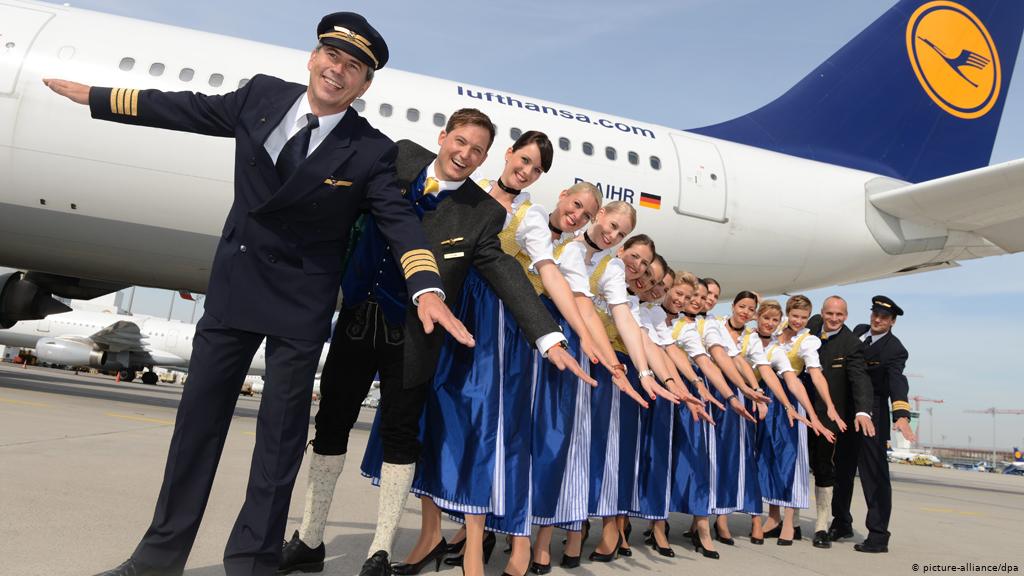


Airline flight attendants
Airline flight attendants must meet very specific physical requirements as well. To get accepted into an airline’s flight attendant training program, you must be at least 18 years old. Your vision must be correctable to at least 20/40.
Flight attendants are trained in the hub or headquarters city of an airline. The focus of training is safety, and attendants will be checked for each type of aircraft in which they work.
The role of a flight attendant derives from that of similar positions on passenger ships or passenger trains.
Additionally, the job of a flight attendant revolves around safety to a much greater extent. Flight attendants on board a flight collectively form a cabin crew, as distinguished from pilots and engineers in the cockpit.
Firt passengers
The German Heinrich Kubis was the world’s first flight attendant, in 1912.[3] Kubis first attended the passengers on board the DELAG Zeppelin LZ 10 Schwaben. He also attended to the famous LZ 129 Hindenburg and was on board when it burst into flames. He survived by jumping out a window when it neared the ground.[4]
Origins of the word “steward” in transportation are reflected in the term “chief steward” as used in maritime transport terminology. The term purser and chief steward are often used interchangeably describing personnel with similar duties among seafaring occupations.
This lingual derivation results from the international British maritime tradition (i.e. chief mate) dating back to the 14th c. and the civilian US Merchant Marine on which US aviation is modelled.
Due to international conventions, in which all ships’ personnel who sail internationally are documented by their countries, the U.S. Merchant Marine assigns duties to the chief steward in the rank and command structure of which pursers are not represented..